

Look Up - Your going to Miss It!
The Tube Chronicles 07/23/2026
In collaboration with NoA & Co, Fujifilm has launched its Look Up campaign — and, fittingly, it made me do exactly that.
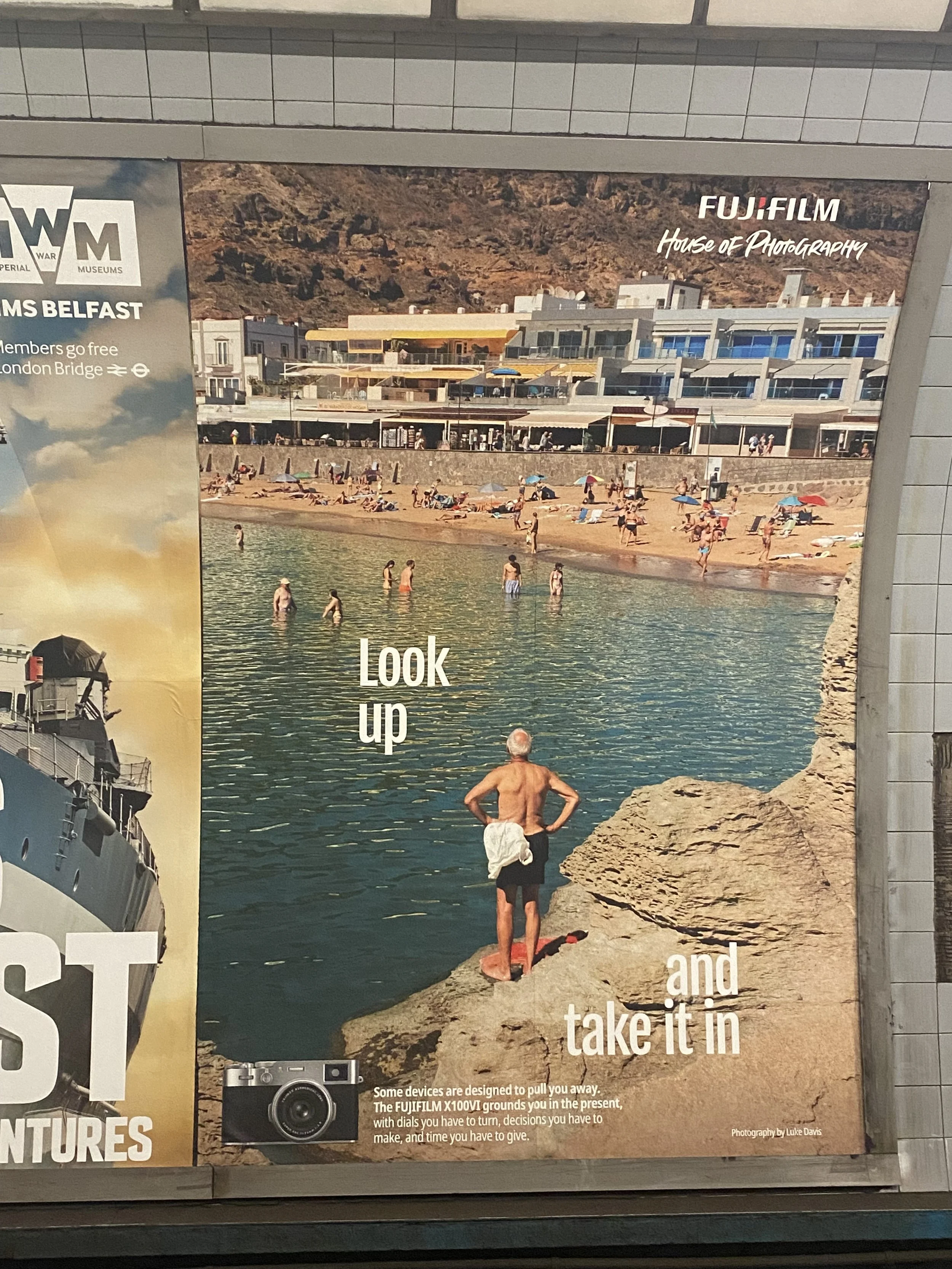
Coming home after a long, unusually hot day in central London, I spotted this Fujifilm advert on the Victoria line. Among the noise of the carriage, the scrolling, and the very London feeling of everyone avoiding eye contact, the image stopped me. There was something almost transportive about it. Feelings of nostalgia and longing immediately took over, and during a heatwave, I genuinely wanted to step straight into the photograph.
Naturally, I went home and looked up the campaign.
Look Up was developed following consumer research commissioned by Fujifilm in the UK. The findings feel particularly relevant to the way we live now: 32% of consumers said they know they should disconnect from their devices more often but rarely do, while 44% reported feeling that they had missed a meaningful moment, event or milestone because they were spending too much time online.
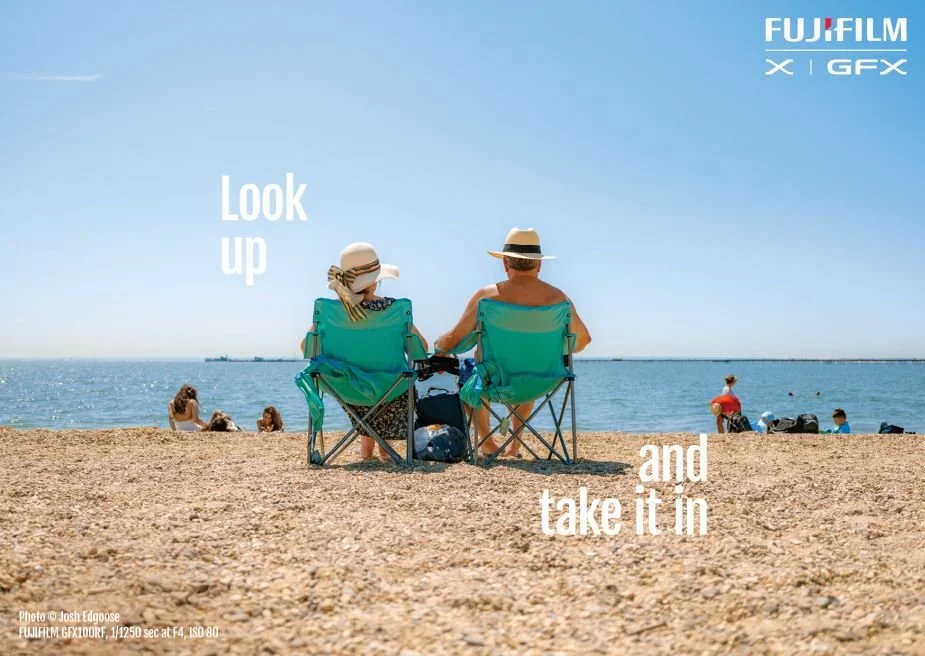
The campaign turns that cultural tension into a beautifully simple piece of brand storytelling: look up. Look at the person across from you. Look at the street. Look at the light. Stay with a moment for a little longer.
What I love most about the creative strategy is that Fujifilm positions cameras as more than photographic tools. They become, in the campaign’s words, “catalysts for living more intentionally.” It is a clever shift in product positioning — moving the conversation away from specifications and towards emotion, behaviour and experience.
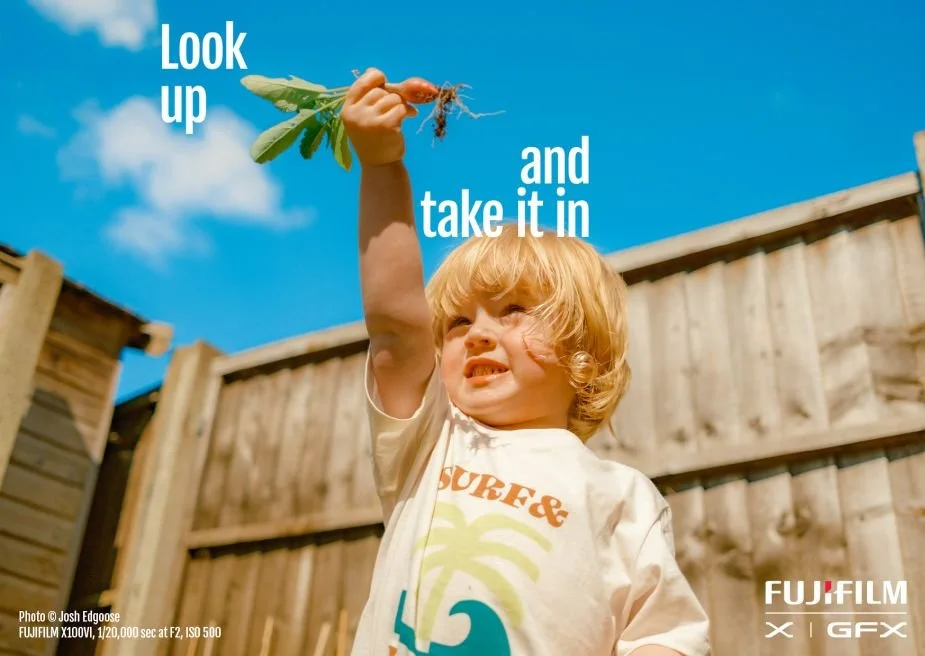
As someone from Gen Z, that idea really spoke to me. Sometimes it feels as though our worlds are getting smaller while our feeds become infinite: billions of micro-trends, endless videos of manufactured lifestyles, and an ever-changing catalogue of aesthetics we are somehow expected to attain.
Which is perhaps why I am so drawn to the current movement towards human-centred creative direction. Across advertising and design, I’m seeing more campaigns embrace imperfection, analogue experiences, real people and real moments as a response to an increasingly AI-generated visual landscape.
And I love it.
There is something hopeful about brands reminding us that the world is still happening outside the screen.
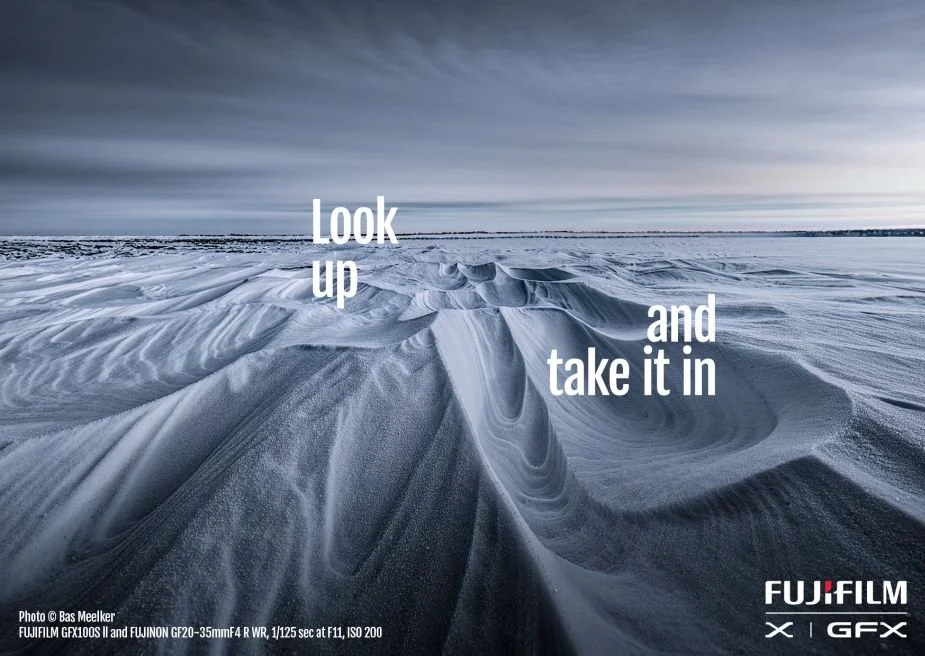
Sometimes, good advertising sells you a product.
Sometimes, it makes you look up.
